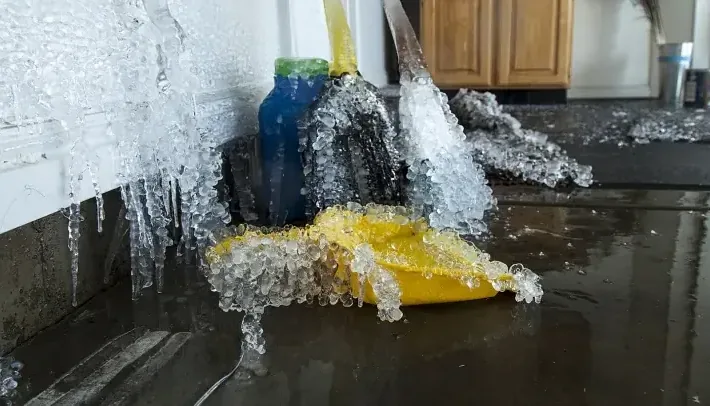
Lake Oswego's emergency guidance warns that pipes and faucets near or inside exterior walls can freeze and burst, with water problems appearing when warmer temperatures return. A new stain, dripping sound or wet floor after a thaw deserves a source inspection even when the weather has improved. The cleanup plan should connect the damaged pipe with the wall, ceiling or floor layers reached by escaping water.
Key takeaways
- Treat renewed dripping after warming as an active source question.
- Arrange safe shutoff before continuing water enlarges the wet area.
- Keep occupants away from sagging ceilings and wet electrical equipment.
- Trace the leak across levels and through adjoining assemblies.
- Document pipe repair and material drying before closing access openings.
Watch the building as temperatures rise
The end of a cold period can reveal a problem that was previously hidden. An occupant may first notice a sound behind a wall, a wet baseboard or water collecting beneath a fixture.
Recording when the symptom appeared and whether the affected fixture was being used gives the plumber useful information without requiring the owner to expose the pipe.
The city specifically identifies pipes near exterior walls as vulnerable to freezing. The assessment should therefore include the reported location and nearby enclosed spaces, while checking the actual route serving the wet area.
A room diagram can connect the suspected release point with the nearest visible stain and any affected space on the level below.
The frozen pipe cleanup service begins with source control and the escaped water. The owner should keep the sequence of cold conditions, warming and observed leakage in the project record.
That account helps the repair team investigate the failure while the restoration crew follows the water into materials that may remain wet after the pipe is fixed.
- Note the first room where a new sound or stain appeared.
- Record whether leakage changes when fixtures are used.
- Photograph spreading marks from a safe position.
Make shutoff and access a safe task
Stopping the supply can limit further release when the shutoff is known and safely accessible. An owner should avoid crossing water, reaching beside wet electrical equipment or entering an unstable space to find it.
The plumber or appropriate utility professional can assist when the location or condition of the controls makes an attempted shutoff unsafe.
A ceiling holding water deserves separation from occupied space below it. Sagging finishes, loose trim and dripping around a fixture can create hazards that are difficult to judge from the floor.
Furniture movement and container placement should wait until access is considered safe, rather than encouraging someone to stand beneath the damaged section to protect a possession.
Electrical concerns should be described specifically when arranging help. A wet light fitting, wall outlet or powered appliance is different from a damp area with no equipment nearby.
Giving the professional the observed location allows the correct safety assessment to be arranged, while occupants keep away from switches and devices that may have been contacted by water.
- Keep people out from under a bulging ceiling.
- Leave wet powered devices untouched.
- Tell the coordinator when the water supply was stopped.
Connect the pipe opening to the wet rooms
Water released inside a wall can travel downward before becoming visible, so the nearest stain may sit away from the failed connection. The inspection should follow wall bases, penetrations and floor transitions, then consider the room below.
Photographs of the release point and the visible boundary help establish how those observations relate across the building.
Burst pipe water damage cleanup includes removal of accessible water and assessment of the surrounding assemblies. The plumber's access opening may provide useful visibility, but the drying crew still needs to determine whether water traveled beyond it.
Additional inspection points should have a clear purpose tied to the wet path and retained materials.
A contents record should accompany that building assessment. Water dripping through a ceiling can affect a bed, shelving or stored papers before it pools on the floor.
Each item group should be photographed in its original position when possible, then assigned a safe handling destination so wet contents do not obstruct access or introduce moisture into another room.
- Inspect the level beneath the reported leak when the route supports it.
- Mark moisture findings around the edge of each visible stain.
- Keep plumbing photographs with the room moisture map.
Evaluate insulation and covered surfaces
An apparently modest opening may reveal insulation or a backing layer that holds water against framing. The retention decision should consider material condition, access and the ability to dry effectively.
The crew should explain what has become wet and why a layer can remain or must be removed, preserving a photograph before the assembly changes again.
Finishes on opposite sides of a wall can behave differently. A painted surface may show a stain while cabinetry or another covering limits access on the reverse face.
The drying plan should acknowledge those restrictions so equipment is not arranged around an exposed patch while a larger concealed section remains beyond the useful airflow path.
The city's history describes residential development spreading during the 1940s and 1950s. For a particular home, the inspection should identify the materials actually present, including later alterations and layered finishes.
The owner can supply remodeling records or previous repair photographs if available, helping the crew understand hidden transitions before selecting an access method.
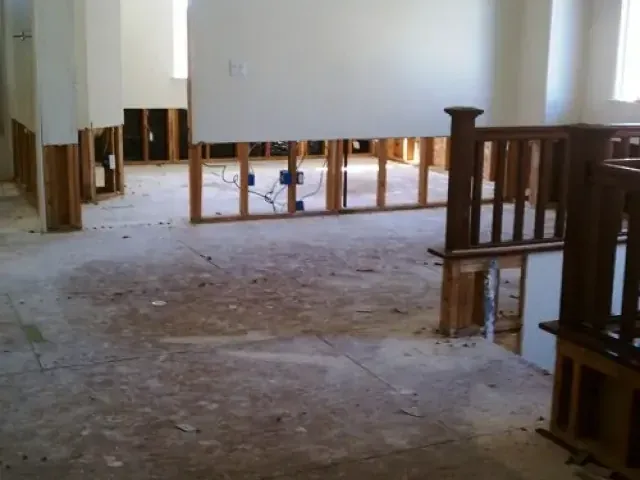
Track the assembly through drying
Once the broken pipe has been addressed and accessible liquid removed, the remaining job is to reduce moisture in retained materials. Structural drying uses equipment suited to the exposed assembly and repeated checks at defined locations.
The record should include the material being measured, so unlike surfaces are not treated as interchangeable readings.
A slow response near an exterior corner may require a closer look at access, insulation or continued leakage. The crew should investigate the specific reason rather than leaving the same arrangement running without explanation.
Changes to equipment placement or material retention belong in the record, along with the observations that prompted the adjustment during the drying process.
Occupants should know which controls and equipment to leave alone and whom to contact when a room must be accessed. Closed doors, stored belongings and interrupted power can change operating conditions.
A practical arrangement accommodates necessary movement while preserving the drying area, and any temporary interruption should be reported so subsequent readings have useful context.
- Keep air paths clear around exposed wall and floor edges.
- Report fresh dripping even after the pipe repair.
- Include concealed locations in the final moisture assessment.
Restore the enclosure with the cause understood
The final pipe repair record should identify the location addressed and any remaining work needed around the opening. A repair professional can evaluate protection for vulnerable plumbing as part of the appropriate trade scope.
The owner benefits from a specific description of that work, especially when the original release occurred in a difficult to access exterior wall.
Drying closeout should show what remains behind the new finish. Photographs of exposed framing, insulation decisions and final material measurements provide a useful handoff to reconstruction.
The finish contractor should also receive details about trim, transitions and affected fixtures so the repair plan covers the full opening created during investigation and moisture removal.
A final walk through can compare the original affected rooms with their present condition. The owner and coordinator should identify outstanding contents decisions, unfinished surfaces and any area still restricted for another trade.
Keeping those items visible prevents the repair of a pipe from being mistaken for completion of the entire water loss, including the materials reached below it.
Questions
Why might water appear after the weather warms?
The city's warning describes burst pipes near exterior walls causing water problems as warmer temperatures return. A thaw can therefore coincide with visible leakage that needs prompt source assessment and a check of surrounding building materials.
Does a small ceiling mark mean the wet area is small?
The mark shows where moisture became visible on that surface. Water may have traveled through a cavity or across a floor layer before reaching it, so inspection should follow the adjoining assembly and any supported path from above.
Should every wall around the repaired pipe be removed?
Access decisions should follow observed damage, material condition and moisture findings. The crew can explain which sections need opening for inspection or drying, and which can remain with a suitable method and repeat measurement plan.
What should the owner retain after the room is repaired?
Keep the plumber's findings, photographs of opened spaces, the drying record and the reconstruction scope together. Those records explain the original leak location and the materials addressed if questions arise during later maintenance or another repair.