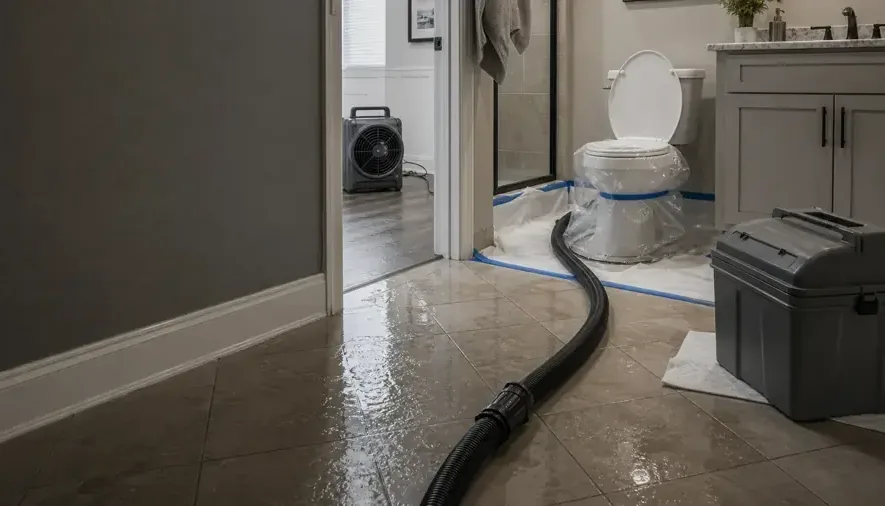
Tualatin has separate sanitary sewer and stormwater systems. That distinction matters when dirty water appears indoors: a rising drain, an overflowing fixture and rain crossing a doorway need different source investigations. The first useful record describes what happened at the building, including which opening released water and which rooms became wet. Occupants should stay clear of wastewater while the source and safe access are assessed.
Key takeaways
- Record the first wet opening before cleanup changes the scene.
- Keep wastewater and affected belongings away from occupied rooms.
- Report drain behavior separately from visible outdoor ponding.
- Approve cleaning and material removal according to actual water contact.
- Retain a room record showing source repair and cleanup as separate tasks.
Follow the opening where water appeared
Water rising through a floor drain gives the plumber a different starting point from water running beneath an exterior door. The owner can describe the earliest visible movement from a dry position, including whether a fixture was operating and whether rainfall was occurring.
Photographs should show the opening and its surrounding floor together.
The Tualatin River runs along most of the city's northern boundary. For a wet building, the inspection follows the physical route from outdoors or a plumbing opening into the room, then checks where that route continues beneath finishes.
A useful diagram marks thresholds, drain locations and changes in floor level without assigning a cause prematurely.
The sewer backup cleanup service addresses water carrying household waste and the materials it reaches. When rain and a drain problem occur together, separate observations help the plumbing and cleanup teams coordinate.
A timestamp beside each observation preserves the sequence even after liquid has been removed and equipment obscures the floor.
- Describe whether water rose, dripped or flowed across the surface.
- Record which fixtures were used before the overflow.
- Photograph outdoor collection from safe, dry ground.
Close access to the affected room
Wastewater on a floor can transfer to footwear, pet paws, cleaning cloths and the underside of movable furniture. Closing a door or establishing a dry boundary reduces that transfer while the cleanup plan is prepared.
Children and pets should remain away from wet materials, disposal bags and the route used to remove contaminated items.
Electrical equipment near the affected area requires particular caution. An occupant should not cross standing water to reach a switch, unplug a device or inspect a floor outlet.
The appropriate utility or electrical professional can establish safe access where water and energized equipment may meet, allowing removal work to proceed without an avoidable exposure.
Household fans should remain off in a sewage affected room until contamination has been addressed. Moving air across dirty surfaces can spread material into otherwise usable space.
The crew should establish where equipment, clean supplies and discarded materials will travel so that a dry hallway does not become part of the cleanup area.
- Keep a dry entrance available for the assessment.
- Leave wet rugs and boxes within the affected boundary.
- Avoid using fixtures that feed a suspected backed up drain.
Give the repair team a useful sequence
A short written sequence can be more useful than a broad description of flooding. It can identify the first affected fixture, other drains that behaved differently, the moment water stopped rising and any attempt to shut off a supply.
Owners should distinguish something witnessed directly from something noticed only after entering the room.
The city's separate systems help frame reporting, while the repair investigation locates the problem serving the property. The plumber needs access to relevant fixtures and drainage components; the mitigation crew needs the rooms where liquid traveled.
Keeping those needs visible allows the owner to arrange access without authorizing unrelated work under a single unclear description.
When accessible water remains on the floor, water extraction may proceed once the work area is safe and the continuing source is controlled. The initial removal record should state whether more liquid appeared during work.
Recurrence calls for renewed source investigation before flooring or wall cavities are closed.
- List affected fixtures by room rather than by assumed pipe route.
- Save any plumbing findings alongside the cleanup photographs.
- Record renewed flow after the first removal separately.
Sort materials by contact and cleanability
A tile face, an absorbent rug and a cabinet base respond differently to wastewater contact. The assessment should identify the material, how far contamination reached and whether cleaning can reach every affected surface.
Hidden backing, joints and enclosed voids deserve attention because a clean visible face can sit over an inaccessible contaminated layer.
Removal decisions should be explained before finishes are dismantled when conditions allow. A photograph and material description help the owner understand why an item can remain or why it needs disposal.
The scope should distinguish building materials from movable belongings so that a contents decision is not lost within a general flooring allowance.
Retained durable surfaces need suitable cleaning after bulk water and debris are removed. Tools and containers also need handling that prevents material leaving the work zone.
The crew should document the surfaces exposed by removal, especially beneath floor coverings and behind trim, because those observations shape both cleaning access and subsequent drying.
- Identify absorbent layers beneath visible finishes.
- Record owner decisions for affected movable property.
- Keep cleaned items separate from items awaiting assessment.
Measure retained assemblies after cleaning
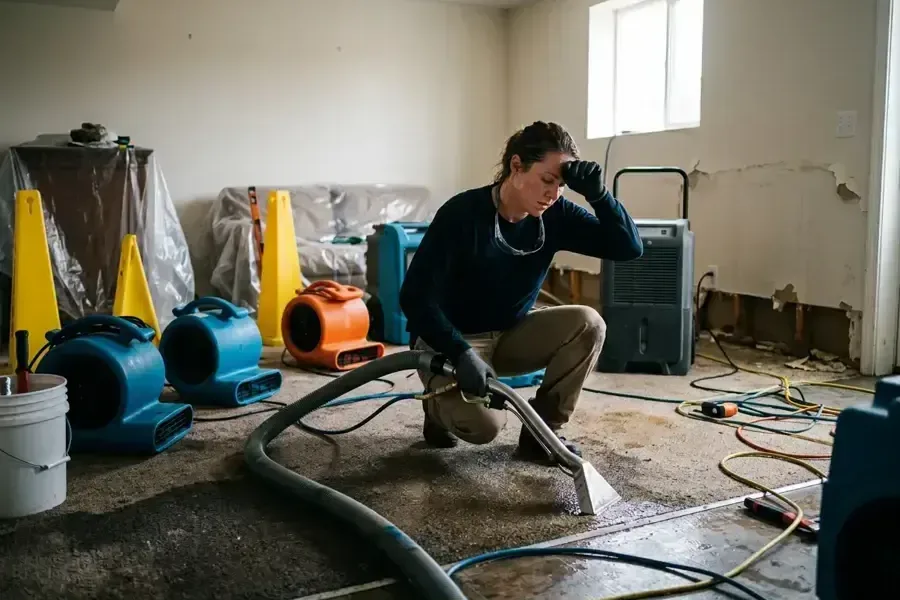
Once contamination has been addressed, retained walls, framing and floors can be evaluated for moisture. The drying record should connect each measurement with a room and material so later visits compare the same locations.
An isolated number without a location is difficult to interpret when equipment moves or repair workers enter the room.
The structural drying process follows moisture within the assembly as well as conditions in the room. Air movement and dehumidification are arranged around materials that can remain.
A cabinet void or a floor edge may need improved access if its response differs from the exposed wall beside it.
Completion should reflect the retained materials, including areas that originally looked dry but received water underneath. Equipment should be adjusted for measured progress rather than removed because the surface looks better.
The owner benefits from a closing explanation of which points were checked, which finishes remain open and what repair can begin next.
Keep source correction visible at the handoff
A clean room and a repaired drain are different results, and the closeout record should identify both. The plumbing report can describe the defect addressed; the cleanup record can show extraction, discarded materials, cleaned surfaces and drying measurements.
This division makes followup easier if a fixture behaves differently after the room returns to use.
Photographs should include the original release area and the farthest affected edges. A labeled room sketch helps a later repair contractor understand why trim was removed in one corner while another remained intact.
Equipment locations, disposal decisions and any inaccessible areas should also remain available with the record rather than relying on verbal recollection.
Before belongings return, the owner should confirm that retained contents are clean and dry enough for their destination. Damp cardboard or an unassessed rug can reintroduce moisture or contamination against a finished surface.
A practical handoff names outstanding repair work, access restrictions and any unresolved source question so each task has a clear next owner.
Questions
Does rain make every indoor overflow a stormwater problem?
Rainfall timing belongs in the incident record, but the opening and plumbing investigation determine the source path. Waste rising through a fixture requires assessment of the drainage serving that fixture, even when water is also collecting outside.
Can a clean looking puddle from a drain be treated as ordinary water?
Wastewater contact determines the necessary precautions even when the liquid looks clear. An overflow connected to household waste needs cautious handling, with occupants kept outside the affected area until the source and material contact have been assessed.
What should remain in place for the first inspection?
Wet furnishings and floor coverings should stay within the restricted area unless safe movement has been arranged. Photographs of their original positions help show the reach of the loss and preserve a record before disposal decisions.
When can a cleaned room be put back into use?
The handoff should address sanitary cleaning, retained material moisture, electrical safety and necessary repairs. The person coordinating the work can then explain which areas are ready and which still need restricted access or another trade.