Ceiling Leak Water Damage in Oregon City
A spreading ceiling stain marks the visible end of a water path above the room. Oregon City ceiling cleanup assesses overhead stability, locates the active source and checks insulation or framing before damaged finishes receive cosmetic repairs.
(888) 373-8814Request a ceiling condition assessment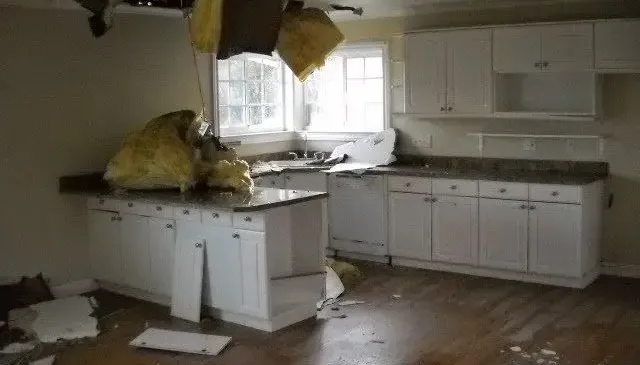
Oregon City's McLoughlin neighborhood includes many older homes overlooking downtown. When a ceiling leaks in an older interior, the assessment needs to identify the actual finish layers and the cavity above them. A visible stain can sit away from the entry point because water follows framing or other surfaces before reaching the room. Cleanup should address that concealed path as well as the damaged overhead finish.
- The restoration team marks wet boundaries before placing drying equipment.
- Source water, contamination and material condition determine the removal scope.
- Documented material readings, checked against an appropriate dry reference, determine completion.
What does ceiling leak water damage cost in Oregon City, OR?
Ceiling leak cleanup in Oregon City depends on stability, cavity access and the number of wet layers above the finish. Insulation removal or water spreading into neighboring rooms can broaden the work beyond repairing a visible stain.
Small accessible ceiling area
- Localized overhead inspection
- Limited finish removal
- Accessible material drying
Room-wide cavity moisture
- Broader insulation assessment
- Expanded cavity access
- Framing moisture checks
Multiple affected rooms
- Connected ceiling assessment
- Several finish boundaries
- Coordinated drying progress
Ranges are typical, not a quote: category of water, square footage, material class and how fast drying started move the number most. Run the water damage cost calculator for a closer range.
How ceiling leak water damage is handled in Oregon City
The tech who does the walkthrough maps moisture through the affected assembly and records a dry comparison. The drying team adjusts airflow and humidity control after each inspection, then confirms the material goal before removing equipment.
- 1
Assess overhead stability first
The room inspection identifies sagging finishes, electrical concerns and safe work boundaries before equipment or occupants move beneath the affected ceiling area.
- 2
Connect the stain with entry
Source investigation follows the water path above the room and coordinates the appropriate plumbing or roof repair with interior access needs.
- 3
Open damaged layers selectively
Controlled removal exposes wet insulation and framing where necessary, while suitable retained finishes are evaluated for effective drying and ongoing moisture checks.
- 4
Record repair readiness
Source correction and retained material readings establish what remains before replacement insulation, ceiling patches and decorative finishes can be installed.
Separate room safety from stain repair
A sagging section or softened surface needs a stability assessment before anyone works beneath it. Residents should avoid pressing a bulge, puncturing the ceiling or placing furniture below continuing drips. Electrical fittings within a wet ceiling add another access concern. The room can require a controlled boundary even when the floor below contains only a small amount of water.
- Observe ceiling changes from outside the area beneath visible sagging.
- Describe any continuing drip after the suspected source was stopped.
- Keep photographs showing stain edges and neighboring overhead surfaces.
- Leave removal of weakened finish sections to controlled cleanup work.
Find what remains wet above the finish
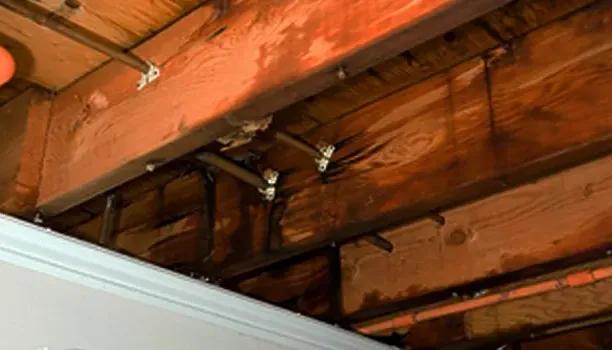
Rivercrest overlooks the Willamette River, while Park Place occupies a bluff above Abernethy Green. Across these settings, the ceiling assembly at the property determines the work. Wet insulation may obstruct cavity drying; retained framing may need direct access for measurements. The opening required to repair a pipe can differ from the opening needed to reach all affected overhead materials.
If rain is the source, roof leak water damage work connects exterior protection with the interior assessment. For plumbing releases, the source repair should be documented separately from ceiling removal and drying.
Close the cavity after a material assessment
Paint and patching belong after the moisture problem is resolved. Suitable retained layers should be measured, and damaged material should be identified for replacement. A ceiling that no longer drips can still hold damp framing or insulation above its visible surface. The final scope should explain remaining access openings and the repairs needed to restore the room's finish.
- Record overhead materials removed and surfaces retained for drying.
- Compare moisture readings at accessible points around the wet area.
- Document source correction before arranging replacement insulation and finishes.
Ceiling leak water damage across Oregon City
Overhead water damage assessment includes McLoughlin, Rivercrest and Park Place in Oregon City ZIP 97045, with attention to safe room use beneath affected ceilings.
The same service nearby: ceiling leak water damage in Tualatin, Lake Oswego, Wilsonville.
Water damage restoration in Oregon City · every neighborhood covered
Related water damage services in Oregon City

Ceiling Leak Water Damage questions in Oregon City, OR
Should a ceiling bulge be punctured?
A weakened ceiling can release water and material unpredictably. Keep the area below clear and arrange an assessment rather than disturbing the surface from inside the room.
Why is the stain away from the plumbing?
Water can follow framing and other concealed surfaces before emerging. The source inspection needs to trace that route instead of limiting work to the visible mark.
Can a ceiling simply be painted after drying?
Cosmetic repair depends on the condition of all affected layers. Damaged finishes, damp insulation and concealed moisture need evaluation before painting can become a suitable next step.
Does every overhead leak come from the roof?
Plumbing, fixtures and other indoor sources can wet a ceiling. The location and timing of the release help direct an investigation of the actual source above.
Can occupants stay in the adjacent room?
Room use depends on access controls, overhead stability and equipment routes. The restoration scope should identify restricted areas and practical passage through unaffected parts of the property.
What shows that the cavity is ready?
Material readings and an inspection of retained layers support the repair decision. The record should also confirm source correction and identify any remaining inaccessible wet area.
Address the moisture above the visible stain
A ceiling cleanup scope can connect source correction, controlled material access and drying before replacement finishes conceal the affected cavity again.