Ceiling Leak Water Damage in Wilsonville
A ceiling stain is a place where water became visible, not necessarily where it entered. Wilsonville ceiling cleanup starts by protecting the room below and tracing moisture through the overhead assembly before repair decisions are made.
(888) 373-8814Check the leaking ceiling area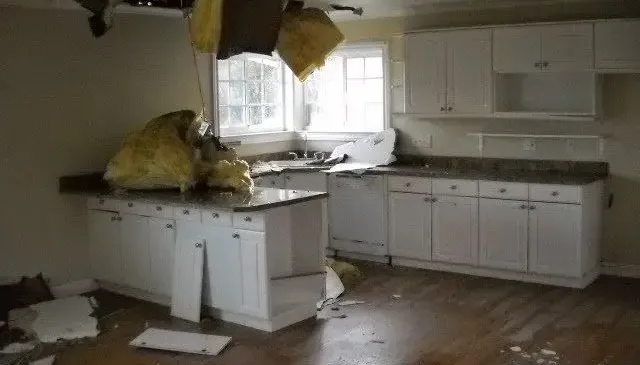
Dripping near a light fitting or a bulging ceiling changes how a room can be used. Occupants should stay clear of the area below and report the condition promptly. At the 2020 census, 50.6% of occupied Wilsonville housing units were renter occupied, making access coordination a practical part of many property repairs. In Villebois, Town Center or Old Town, the responsible contact may need to arrange entry both to the damaged room and to the space above it.
- The restoration team marks wet boundaries before placing drying equipment.
- Source water, contamination and material condition determine the removal scope.
- Documented material readings, checked against an appropriate dry reference, determine completion.
What does ceiling leak water damage cost in Wilsonville, OR?
Ceiling leak cleanup in Wilsonville depends on cavity access, insulation condition and moisture spread beyond the visible mark. Estimates should separate overhead removal and drying from source repairs, electrical work and replacement of the final ceiling finish.
Small accessible ceiling area
- Limited overhead exposure
- Reachable cavity inspection
- Localized drying setup
Room-wide cavity moisture
- Broader insulation assessment
- Selective ceiling removal
- Additional material readings
Multiple affected rooms
- Connected overhead spaces
- More access coordination
- Expanded finish disturbance
Ranges are typical, not a quote: category of water, square footage, material class and how fast drying started move the number most. Run the water damage cost calculator for a closer range.
How ceiling leak water damage is handled in Wilsonville
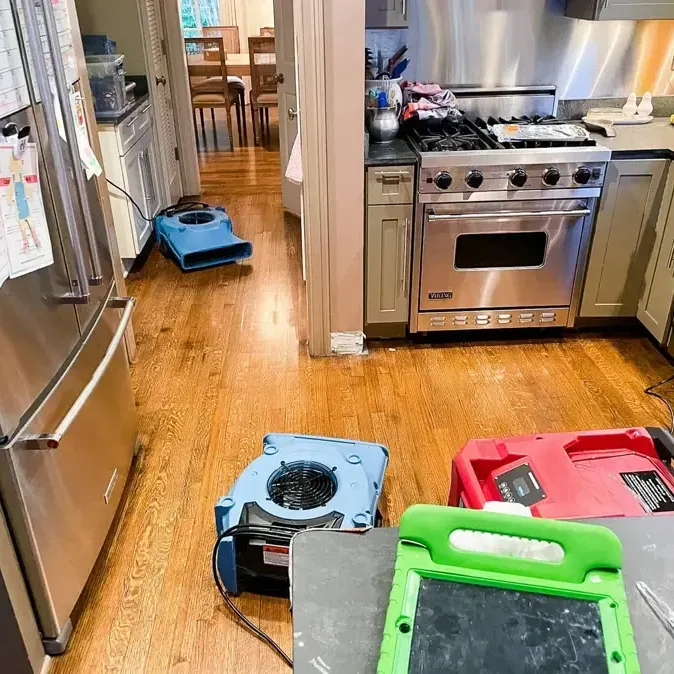
The tech who does the walkthrough maps moisture through the affected assembly and records a dry comparison. The drying team adjusts airflow and humidity control after each inspection, then confirms the material goal before removing equipment.
- 1
Secure the space below
The assessment checks sagging finishes, electrical concerns and the boundaries needed to keep occupants away from overhead inspection work.
- 2
Trace the source and spread
Inspection connects ceiling changes with entry above, using accessible openings and moisture readings to identify the affected cavity and wet layers.
- 3
Remove unstable or unsuitable layers
Controlled removal exposes retained materials and allows wet insulation or damaged finishes to be handled without disturbing unaffected adjoining surfaces.
- 4
Document readiness for ceiling repair
Source correction, material condition and remaining access concerns are recorded before patching or painting proceeds over the previously wet cavity.
Describe changes without disturbing the ceiling
A photograph from outside the affected area can record the stain boundary, sagging and active dripping. Puncturing a bulge or pulling down wet material can release water and unstable debris. The initial assessment should consider electrical fixtures, the condition of the ceiling and whether the room above contains a possible plumbing source before any controlled opening is planned.
- Keep beds, desks and seating outside the area beneath sagging material.
- Report whether dripping changes during rain or fixture use.
- Identify any light or electrical fitting within the wet area.
- Arrange permission to inspect the relevant space above the ceiling.
Use an opening to answer specific questions
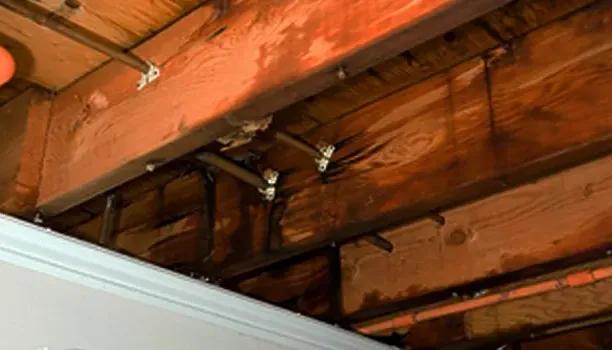
Water can travel along framing or piping before it reaches the visible stain. Inspection should establish which layers are wet and whether insulation or damaged drywall needs removal. Wilsonville requires a plumbing permit when piping inside a ceiling is altered. Source repair access should therefore be planned together with the openings needed to assess and dry the affected cavity.
If an overhead pipe is responsible, the pipe damage scope can be coordinated with ceiling mitigation. If rain entry is involved, weather protection and roof assessment become part of the source work.
Delay cosmetic closure until the cavity is ready
Stain blocking paint changes the appearance without addressing moisture above the finish. Retained framing and other accessible layers should be monitored during drying, with any isolated wet area clearly identified. The repair handoff should describe the corrected source, removed material and condition of the cavity so the owner can schedule patching without hiding unfinished mitigation work.
- Record the opening location and materials removed during access.
- Check adjoining ceiling sections when moisture extends beyond the stain.
- Keep source repair documents with the final material observations.
Ceiling leak water damage across Wilsonville
Ceiling assessments include Villebois, Town Center and Old Town within ZIP 97070, with access coordination for occupants, owners and adjoining spaces above the affected room.
The same service nearby: ceiling leak water damage in Tualatin, Sherwood, Tigard.
Water damage restoration in Wilsonville · every neighborhood covered
Related water damage services in Wilsonville

Ceiling Leak Water Damage questions in Wilsonville, OR
Should a tenant puncture a bulging ceiling?
Occupants should stay away from unstable overhead material and notify management. Controlled opening requires assessment of water, debris and electrical hazards above the room.
Can a ceiling leak start away from the stain?
Water may travel along framing or pipes before appearing below. Inspection should follow the assembly beyond the visible mark to locate the source.
What should a tenant include in the first report?
The room, active dripping, sagging and nearby electrical fixtures are useful details. Safe photos and any connection to rainfall or fixture use can also help.
Does painting over a dry stain finish the job?
The overhead cavity may still contain moisture. Material condition and source correction need check before cosmetic repair conceals the area again.
Who needs access when a room above is occupied?
The owner or manager should coordinate permission with the relevant occupants. Source tracing and repair may require entry beyond the damaged room itself.
Can wet insulation stay while the ceiling dries?
That decision depends on saturation, condition and drying access. Insulation that holds moisture or prevents assessment may require removal from the affected cavity.
Restore the cavity before restoring its finish
Ceiling recovery should address unstable material, concealed moisture and the repaired source before a fresh finish hides the space above the occupied room.