Roof Leak Water Damage in Oregon City
Rain can travel through attic materials before appearing on a ceiling below. Oregon City roof leak cleanup connects temporary weather protection with an interior moisture assessment so wet insulation, framing and finishes receive attention beyond the visible drip.
(888) 373-8814Discuss rain entry above the ceiling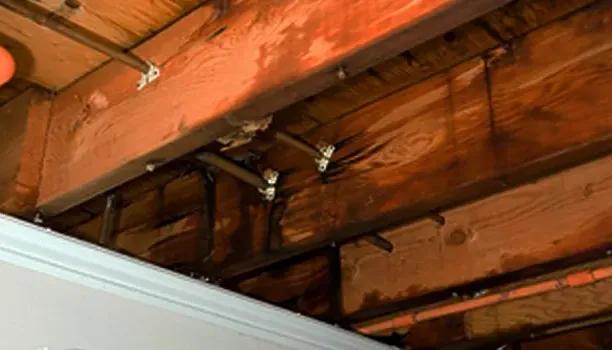
Oregon City has cool, wet winters and hot, dry summers. During rain, an opening above occupied rooms can keep adding water while the first stain is being investigated. Restoration planning therefore needs both an exterior source task and an interior damage task. A roof professional addresses the entry problem; the cleanup assessment examines what happened to insulation, framing, ceilings and any surfaces below the leak.
- The restoration team marks wet boundaries before placing drying equipment.
- Source water, contamination and material condition determine the removal scope.
- Documented material readings, checked against an appropriate dry reference, determine completion.
What does roof leak water damage cost in Oregon City, OR?
Roof leak water damage costs in Oregon City depend on attic access, insulation condition and the extent of interior spread. Exterior roof repair and temporary protection should be identified separately from the cleanup and drying estimate for affected rooms.
Limited attic and ceiling area
- Focused cavity inspection
- Localized material access
- Small drying area
Broader overhead spread
- Wet insulation evaluation
- Expanded framing checks
- Ceiling removal planning
Several interior assemblies
- Connected room assessment
- Multiple finish decisions
- Detailed drying oversight
Ranges are typical, not a quote: category of water, square footage, material class and how fast drying started move the number most. Run the water damage cost calculator for a closer range.
How roof leak water damage is handled in Oregon City
The tech who does the walkthrough maps moisture through the affected assembly and records a dry comparison. The drying team adjusts airflow and humidity control after each inspection, then confirms the material goal before removing equipment.
- 1
Locate interior rain damage
Inspection connects damaged rooms with reported roof conditions and identifies protection needs before the interior drying scope is set.
- 2
Examine attic layers
Accessible insulation, framing and ceiling surfaces are checked for retained moisture. Selective removal creates access where wet layers obstruct inspection or drying.
- 3
Dry suitable retained assemblies
Equipment is arranged around the opened area and adjusted to support moisture removal from structural materials that remain suitable for retention after inspection.
- 4
Prepare the reconstruction handoff
Final material readings and removal records clarify which overhead surfaces are ready for repair and which source or access issues still require attention.
Protect the interior while the source is addressed
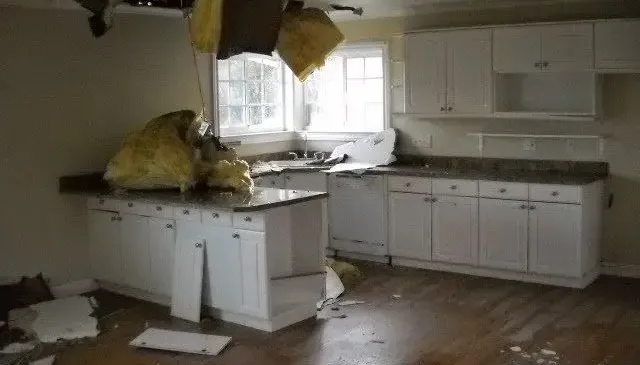
Roof access can be unsafe during active weather, and occupants should not climb up to investigate a leak. Inside, a clear boundary beneath unstable ceiling areas helps keep the room safe. A container beneath an accessible drip may collect visible water, but the surrounding cavity can still be saturated. The work scope should describe any temporary source protection needed before sustained drying is practical.
- Report whether dripping begins or intensifies during active rainfall.
- Keep the area beneath softened ceiling finishes clear of occupants.
- Describe attic entry restrictions before arranging an interior inspection visit.
- Photograph affected room surfaces without entering an unsafe roof space.
Inspect the route through attic materials
Rivercrest overlooks the Willamette River, South End is in the southwest part of the city, and Canemah sits between the river and a bluff. A home in any of these settings needs its own overhead assessment. Water can travel along framing before reaching insulation or ceiling finishes. Wet insulation may need removal to expose structural surfaces, while suitable framing can require targeted airflow and repeated moisture checks.
Where finishes have lost strength, ceiling leak cleanup provides controlled interior access. Source patching alone leaves those material decisions unfinished, so the estimate should identify both repair responsibilities and the moisture treatment planned below the roof.
Keep the cavity accessible through the dry out
Retained materials need a drying endpoint that can be checked before insulation or ceiling finishes are replaced. Equipment settings and access may change as the affected area becomes clearer. A completion record should identify the source work reported, materials removed and the condition of the surfaces remaining in place. These details make the later reconstruction discussion more precise.
- Track moisture along the observed overhead water path and edges.
- Reassess any area that becomes wet again during additional rain.
- Keep finish replacement separate from unresolved exterior repair tasks.
Roof leak water damage across Oregon City
Roof related interior cleanup includes Rivercrest, South End and Canemah in Oregon City ZIP 97045, with attic access and active weather exposure assessed before work.
The same service nearby: roof leak water damage in Tualatin, Lake Oswego, Wilsonville.
Water damage restoration in Oregon City · every neighborhood covered
Related water damage services in Oregon City
Roof Leak Water Damage questions in Oregon City, OR
Can roof patching resolve all indoor damage?
Stopping rain entry addresses the source. Wet insulation, framing and ceilings still need inspection so retained moisture and weakened materials are handled before finishes are repaired.
Should the attic be entered during the leak?
Unsafe access, wet electrical components and concealed footing can create hazards. Describe the access arrangement and let the assessment establish a safe inspection method for the space.
Why is water appearing away from roof damage?
Framing and other surfaces can direct water before it reaches the ceiling. Inspection follows the wet route rather than assuming the visible drip sits directly below entry.
Does every piece of wet insulation stay?
Insulation condition, exposure and drying access influence the decision. Some material may require removal to expose framing and prevent a concealed wet layer from remaining overhead.
What happens if another storm arrives?
The source protection plan needs assessment if rain reenters. Newly wet areas should be documented and the interior drying arrangement adjusted to the changed building conditions.
When can the ceiling be reconstructed?
The source and retained material moisture both need assessment. Replacement work should follow a documented drying assessment and a clear list of any outstanding roof repairs.
Connect roof protection with interior recovery
An organized cleanup plan can address insulation access, damaged ceiling removal and retained framing moisture while the exterior entry problem receives repair attention.