Sewer Backup Cleanup in Tigard
Wastewater crossing a bathroom threshold changes how the adjoining room must be handled. Restricting contact, diagnosing the drain problem and deciding which wet materials can remain are central to a controlled sewage cleanup.
(888) 373-8814Plan access around the sewage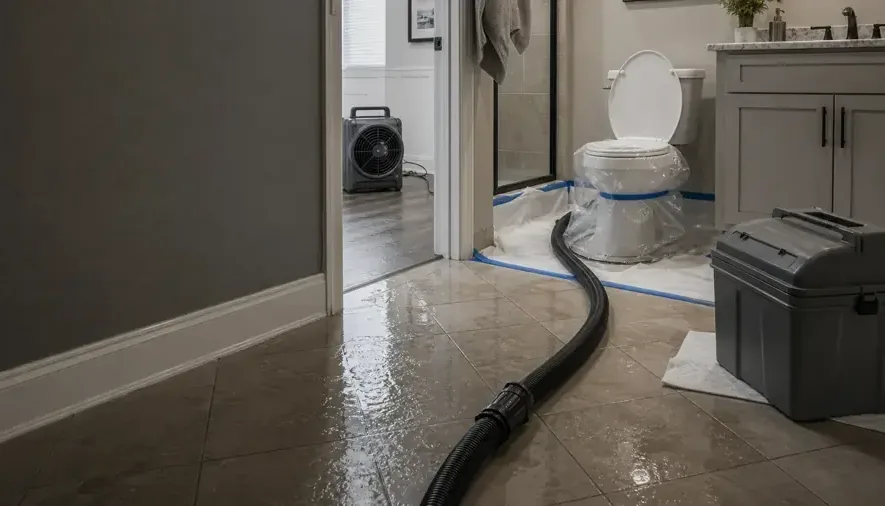
Sewer backup cleanup in Tigard begins at the edge of the contaminated area. Footwear, moved belongings and poorly placed equipment can carry wastewater residue into previously unaffected rooms. The initial plan therefore defines access and handling before removal starts. A plumbing diagnosis is also necessary: a drain backing into a room needs its own investigation, whether the underlying obstruction or failure is near the fixture or farther along the drainage system.
- The restoration team marks wet boundaries before placing drying equipment.
- Source water, contamination and material condition determine the removal scope.
- Documented material readings, checked against an appropriate dry reference, determine completion.
What does sewer backup cleanup cost in Tigard, OR?
Sewer backup cleanup in Tigard is priced around the contamination footprint, porous material removal and cleaning access. A washable room with limited contact differs from wastewater beneath finished flooring or spread into several connected living spaces.
Confined hard-surface backup
- Limited contact area
- Accessible residue removal
- Hard surface cleaning
Finished-room contamination
- Porous finish assessment
- Controlled material removal
- Concealed surface access
Multiple affected spaces
- Broader separation needs
- Additional content handling
- Connected assembly inspection
Ranges are typical, not a quote: category of water, square footage, material class and how fast drying started move the number most. Run the water damage cost calculator for a closer range.
How sewer backup cleanup is handled in Tigard
The tech who does the walkthrough maps moisture through the affected assembly and records a dry comparison. The drying team adjusts airflow and humidity control after each inspection, then confirms the material goal before removing equipment.
- 1
Define wastewater contact
Map the affected surfaces and traffic routes while coordinating the drain diagnosis and any required limits on fixture use.
- 2
Remove unsuitable materials
Handle contaminated liquid and porous components through a controlled route, recording the items and finishes that cannot remain.
- 3
Clean reachable surfaces
Address residue on exposed materials and inspect joints or recesses that could retain wastewater beyond the obvious room surfaces.
- 4
Plan drying and reinstatement
Evaluate retained materials after cleaning, establish moisture checks and explain the remaining conditions needed before replacement finishes are installed.
Separate the backup from other water sources
The city describes stormwater crossing streets and parking lots before reaching local waterways. That exterior movement is different from wastewater returning through a household drain. At a property near Main Street, useful observations include which fixture overflowed, whether another fixture was running and where the first wet area appeared. These details help the repair professional investigate the cause without treating every dirty water incident as the same problem.
Occupants should avoid using affected fixtures until the drainage problem is assessed. Continued discharge can enlarge the cleanup footprint while the first room is still being evaluated.
Make the material boundary visible
A bathroom near Ash Avenue may have washable surfaces beside absorbent flooring or a cabinet base. Cleanup decisions follow what the wastewater contacted. Porous material that cannot be effectively cleaned may need removal, while exposed hard surfaces require removal of residue and appropriate cleaning. Seams, gaps and hidden bases deserve attention because wastewater can travel into spaces beyond the visible puddle.
- Mark the clean approach and the contaminated handling area.
- Record contacted contents before bagging or other controlled removal.
- Inspect adjoining wall bases and flooring at the room threshold.
Complete cleaning before assessing the drying work
Air movement across an uncleaned sewage affected room can distribute unwanted material. Cleaning and necessary removals should establish the conditions for the next stage. In a managed property around Hall Boulevard, the owner also needs to arrange access wherever the backup crossed between rooms or units. After the exposed surfaces are addressed, remaining assemblies can be assessed for moisture. The structural drying overview describes measurement of retained layers and the records needed before rebuilding covers them.
Sewer backup cleanup across Tigard
Sewage cleanup assessments include homes around Main Street, Ash Avenue and Hall Boulevard, with access planning across Tigard residential ZIP areas 97223 and 97224.
The same service nearby: sewer backup cleanup in Tualatin, Lake Oswego, Sherwood.
Water damage restoration in Tigard · every neighborhood covered
Related water damage services in Tigard
Sewer Backup Cleanup questions in Tigard, OR
Is wiping the floor enough after a backup?
Wastewater can enter joints and porous layers that a surface wipe misses. The contact area and material construction determine the cleaning and removal needs.
Should bathroom fans run during cleanup?
Air movement should be assessed before contaminated residue is disturbed. Ordinary fans can move particles beyond the room rather than address the source of contamination.
Does the cleanup also clear the drain?
Drain diagnosis and repair are distinct from restoring the room. The written scope should identify who handles the blockage and when fixture use can resume.
Can a wet area rug be retained?
That depends on wastewater contact and the material's ability to be cleaned appropriately. Porous items may require disposal even after the visible liquid is removed.
What if the backup reaches another unit?
The property manager should coordinate access and authorization across the affected spaces. Inspection needs to follow the wastewater path beyond the first reported room.
Why are wall bases checked after extraction?
Wastewater can wick into porous wall materials or collect behind trim. Removing the puddle leaves those contacted layers needing their own assessment and treatment.
Restore the room after the drain problem
Controlled handling, suitable material decisions and careful surface cleaning establish the next steps toward drying and repair.