Sewer Backup Cleanup in Lake Oswego
Wastewater on a floor changes how the entire room must be handled. Access, porous finishes and the cleanup route need attention before drying equipment starts, while the drainage problem receives its own investigation and repair.
(888) 373-8814Describe the sewage affected room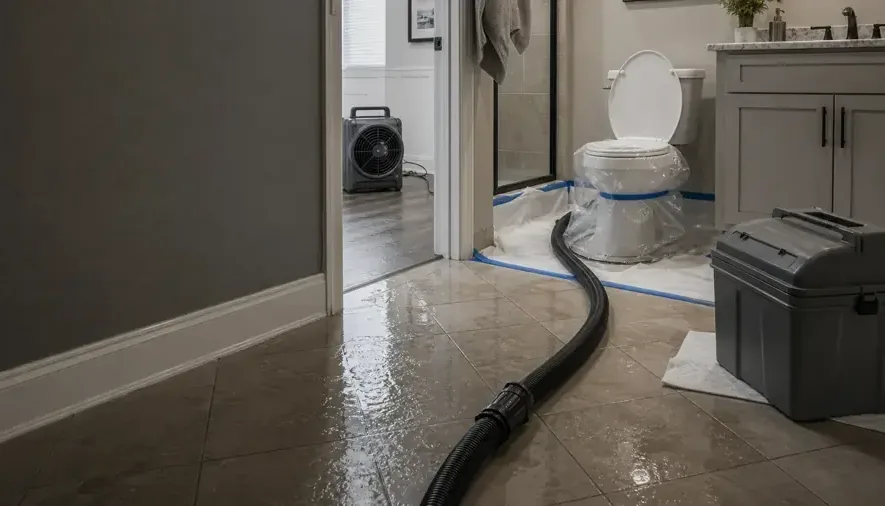
A sewer backup should be treated as a contaminated room problem, not just a blocked fixture. Water can spread beneath bathroom flooring and reach carpet outside the doorway while solids remain near the original overflow. Lake Oswego reports that wipes, plastic applicators and paper towels clog pumps and contribute to backups and overflows. Unusually heavy rainfall also challenges the municipal sewer system each winter. Those different pressures make the source investigation essential while the indoor cleanup boundary is established and household access is restricted.
- The restoration team marks wet boundaries before placing drying equipment.
- Source water, contamination and material condition determine the removal scope.
- Documented material readings, checked against an appropriate dry reference, determine completion.
What does sewer backup cleanup cost in Lake Oswego, OR?
Sewer backup cleanup in Lake Oswego is shaped by contaminated surface area, porous material involvement and access for removal. These planning ranges increase as wastewater reaches finished rooms or several spaces; drainage repair and rebuilding should be itemized separately.
Confined hard-surface backup
- Restricted affected footprint
- Recoverable hard surfaces
- Controlled waste removal
Finished-room contamination
- Porous finish disposal
- Exposed assembly cleaning
- Retained material drying
Multiple affected spaces
- Wider contamination boundary
- More removal coordination
- Several cleaned drying zones
Ranges are typical, not a quote: category of water, square footage, material class and how fast drying started move the number most. Run the water damage cost calculator for a closer range.
How sewer backup cleanup is handled in Lake Oswego
The tech who does the walkthrough maps moisture through the affected assembly and records a dry comparison. The drying team adjusts airflow and humidity control after each inspection, then confirms the material goal before removing equipment.
- 1
Map wastewater contact
Identify where sewage traveled and how occupants can avoid the affected area while the source investigation and cleanup are coordinated.
- 2
Remove unsuitable materials
Handle contaminated porous finishes and contents according to their condition, maintaining separation between the removal path and unaffected living spaces.
- 3
Clean retained surfaces
Address accessible contamination on materials selected to remain, inspecting joints and recesses exposed after damaged finishes have been removed.
- 4
Dry and check the space
Measure retained assemblies through the dryout and document the remaining repair needs before new materials enclose previously contaminated cavities.
Keep the contamination boundary visible
A bathroom in Evergreen, a lower room in Old Town or an affected utility space in Waluga needs a clean route around the work. Shoes, belongings and equipment can carry wastewater beyond the visibly wet floor. The assessment should identify all contacted surfaces, including edges beneath cabinets and any porous material that absorbed the release. Household fans should remain off in the contaminated area until the cleanup plan is established.
- Keep children and pets away from the room and removal route.
- Avoid using fixtures that could add water to the blocked drain.
- Photograph affected belongings without carrying them through clean living spaces.
- Identify carpet, padding and wallboard touched by the wastewater release.
Drain repair and room cleanup solve different problems
Public Works Maintenance operates the city's municipal sewer collection system. The city describes a lateral as the smaller pipe carrying household drain waste into that system. Determining where the blockage occurred supports the repair plan; it does not replace cleaning inside the building. Property specific responsibility and access need to be established during that investigation rather than presumed from the location of an overflowing fixture.
Lake Oswego's overflow response includes containing and vacuuming sewage before it reaches the lake or stormwater system. Indoors, a similarly deliberate separation of contaminated and clean areas helps organize removal without widening the affected footprint.
Dry only what can be retained after cleaning
Unsuitable porous finishes need controlled disposal, while recoverable surfaces require thorough cleaning before drying. The scope should identify both groups clearly. Drying checks then focus on retained framing and other assemblies exposed during removal. A water extraction assessment may support removal planning, but sewage handling determines the protective measures and material decisions. Rebuilding follows source correction, cleaning and a satisfactory check of remaining moisture.
Sewer backup cleanup across Lake Oswego
Wastewater cleanup assessments serve Evergreen, Old Town and Waluga, including affected bathrooms and lower rooms where access must be separated from occupied spaces.
The same service nearby: sewer backup cleanup in Tualatin, Tigard, Oregon City.
Water damage restoration in Lake Oswego · every neighborhood covered
Related water damage services in Lake Oswego

Sewer Backup Cleanup questions in Lake Oswego, OR
Can a sewage spill be dried with ordinary household fans?
Fans do not remove contamination and can disturb the affected area. Restrict access until the cleaning and material removal requirements have been assessed for the room.
Does fixing the clogged drain finish the restoration?
Clearing the drain stops the source problem, but wastewater already inside still needs cleanup. Affected porous layers and concealed edges require their own inspection and decisions.
Should every item in the bathroom be discarded?
Contact and material condition matter. The assessment separates recoverable objects from unsuitable porous contents, with photographs and disposal records explaining the handling of damaged belongings.
Why would carpet outside the doorway need attention?
Wastewater can wick into padding and backing beyond the visible spill. That adjoining area needs assessment even when most solids stayed close to the overflowing fixture.
Can the overflow be blamed on rain immediately?
Heavy rainfall can challenge the sewer system, but an individual backup still needs investigation. Local obstructions and the affected drainage route also require examination before repair.
When can replacement flooring be installed?
Installation follows source correction, required removal, cleaning and drying verification. The retained substrate must be suitable for the replacement finish rather than merely dry to touch.
Separate contamination before planning the rebuild
For Lake Oswego sewage losses, the next step connects restricted access, drain investigation and careful recovery of the affected interior.