Basement Flooding Cleanup in Lake Oswego
A basement holds more than the water visible at the stairs. Wet wall bases, stored belongings and concealed flooring need separate decisions, starting with safe access and the reason water reached the lower room.
(888) 373-8814Check the flooded lower room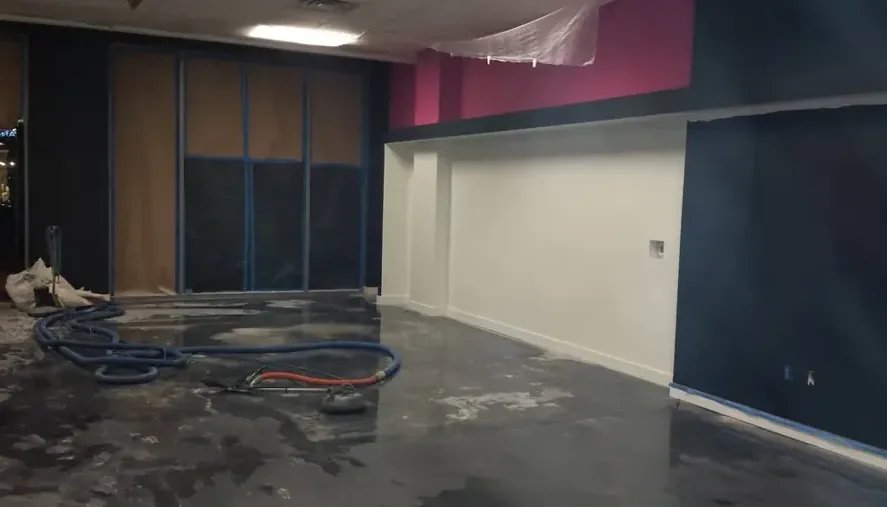
The stair landing is a poor place to judge a flooded basement. Water can cover electrical equipment, soften stored cartons and disappear under a finished partition. Lake Oswego's February 1996 flooding affected basements around Oswego Lake, with lower lakeshore and Oswego canal homes among the most seriously affected properties. A lower room assessment should therefore begin before entry, with questions about the source, utilities and changing water level. Removing contents or starting a household fan comes later, after the working conditions are established.
- The restoration team marks wet boundaries before placing drying equipment.
- Source water, contamination and material condition determine the removal scope.
- Documented material readings, checked against an appropriate dry reference, determine completion.
What does basement flooding cleanup cost in Lake Oswego, OR?
Basement flooding cleanup in Lake Oswego depends on the room finish, water contamination and drying access. These ranges distinguish exposed lower spaces from finished or contaminated losses; source correction and later reconstruction need their own clear scope.
Unfinished lower room
- Exposed floor cleanup
- Accessible lower walls
- Limited finish removal
Finished room loss
- Wet partition assessment
- Flooring layer access
- Retained framing dryout
Contaminated basement
- Controlled material disposal
- Detailed surface cleaning
- Separated drying work area
Ranges are typical, not a quote: category of water, square footage, material class and how fast drying started move the number most. Run the water damage cost calculator for a closer range.
How basement flooding cleanup is handled in Lake Oswego
The tech who does the walkthrough maps moisture through the affected assembly and records a dry comparison. The drying team adjusts airflow and humidity control after each inspection, then confirms the material goal before removing equipment.
- 1
Establish safe lower access
Inspect entry conditions and utility concerns before selecting the removal approach and deciding where equipment can operate within the basement.
- 2
Clear water and affected contents
Remove accumulated water and organize contents handling so wet storage does not block inspection of the underlying floor and wall junctions.
- 3
Open damaged layered areas
Identify materials unsuitable for retention and create the access needed to clean and dry remaining assemblies without concealing ongoing moisture.
- 4
Confirm the rebuilding boundary
Check drying progress and the source correction status, then list remaining floor, wall and contents tasks separately from completed mitigation work.
Separate the floor loss from the wall loss
An unfinished room and a finished living space can hold similar amounts of water but require different work. Exposed concrete allows inspection that carpeting and wallboard conceal. In a Palisades property, the relevant question is which actual layers became wet. A Hallinan Heights lower room needs its own inspection of wall bases and storage, while access in Glenmorrie should be planned around the entrance serving the affected level.
- Mark wet partition bases rather than relying only on visible stains.
- Check insulation where wall openings expose a damp enclosed cavity.
- Separate salvageable belongings from water damaged cartons and porous contents.
- Assess flooring layers before keeping a finish over wet backing.
Resolve inflow before closing the room
Exterior entry, a supply release and a drain backup produce different source control tasks. Lake Oswego maintains a stormwater system separate from municipal sewers, so a lower room filling during rain still needs careful source identification. A drainage problem outside the wall cannot be resolved by replacing interior drywall. Likewise, a fixture overflow requires investigation of the drainage path before finishes return.
Dirty water introduces cleaning and disposal requirements that change the recovery sequence. The sewage cleanup page covers those precautions when wastewater reaches a lower room.
Measure the surfaces that will be enclosed again
Once unsuitable material is removed, the remaining framing and floor assembly need a controlled dryout. Equipment should reach the actual damp surfaces, including corners behind shelving and the bases of partitions. Recorded checks support the decision to stop drying. A useful closeout distinguishes dry retained materials from outstanding waterproofing, plumbing or finish work, giving the homeowner a practical sequence for returning the basement to use.
Basement flooding cleanup across Lake Oswego
Lower room cleanup is available for properties in Palisades, Hallinan Heights and Glenmorrie; describe the affected entrance and any submerged equipment when arranging assessment.
The same service nearby: basement flooding cleanup in Tualatin, Tigard, Oregon City.
Water damage restoration in Lake Oswego · every neighborhood covered
Related water damage services in Lake Oswego

Basement Flooding Cleanup questions in Lake Oswego, OR
Does a basement need cleanup if water recedes by itself?
Receding water can leave wet layers and contamination behind. Inspection should address wall bases, contents and floor assemblies even when the room no longer holds a puddle.
Can shelves be moved before the inspection?
Items outside the affected area can stay clear of the work route. Submerged shelving and heavy wet contents should wait for a safe handling assessment.
Why check a closet that never showed standing water?
Moisture may pass beneath a partition or floor covering. An adjoining closet can contain damp materials despite lacking the visible accumulation found in the main room.
Is drainage repair part of every basement cleanup?
The water source determines that need. Cleanup and drying address the interior loss, while any exterior drainage correction should be identified as a separate coordinated task.
Will exposed concrete dry without attention?
Concrete can retain moisture after surface water disappears. Conditions, floor coverings and planned finishes influence whether controlled drying and additional checks are needed before rebuilding.
Can finished walls be closed immediately after pumping?
Wall cavities need inspection and appropriate drying first. Closing damp framing or insulation behind new finishes can leave the original water damage unresolved beneath the repair.
Recover the lower room in a sensible sequence
A Lake Oswego basement plan should connect safe entry, source correction, damaged material decisions and documented drying.