Sewer Backup Cleanup in Oregon City
A backed up drain can carry contamination beyond the puddle around the fixture. Oregon City sewage cleanup establishes a controlled work area, evaluates exposed belongings and finishes, and coordinates removal with the plumbing problem that caused the overflow.
(888) 373-8814Arrange a wastewater damage assessment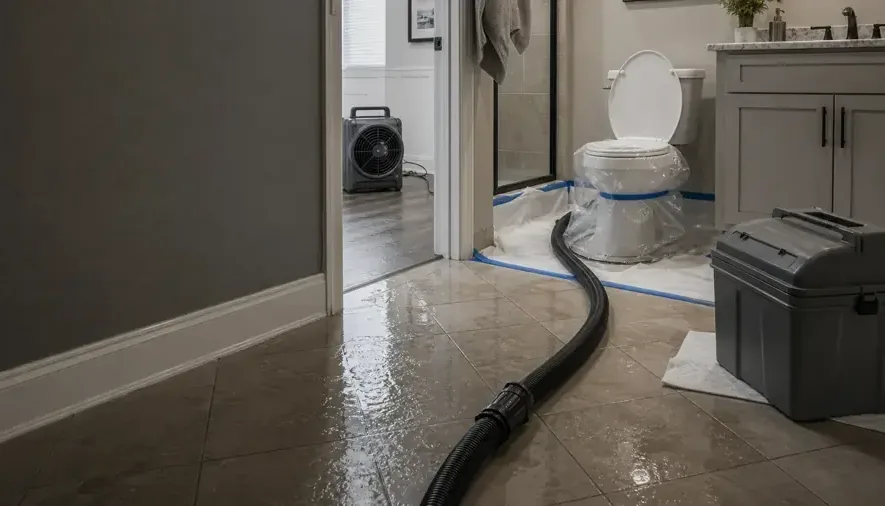
Oregon City has a separated sewer system, but stormwater and groundwater can still enter through inflow and infiltration. The city identifies connected roof gutters and catch basins as inflow sources, and breaks in pipes or manholes as infiltration pathways. During an indoor backup, the immediate task is to contain the affected area and identify which rooms, fixtures and materials have been exposed to wastewater.
- The restoration team marks wet boundaries before placing drying equipment.
- Source water, contamination and material condition determine the removal scope.
- Documented material readings, checked against an appropriate dry reference, determine completion.
What does sewer backup cleanup cost in Oregon City, OR?
Sewer backup cleanup in Oregon City reflects the contaminated footprint, absorbent material removal and cleaning access. A hard floor around a single fixture requires a different scope from wastewater beneath cabinets or across multiple finished rooms.
Confined hard-surface backup
- Localized wastewater removal
- Accessible surface cleaning
- Boundary condition checks
Finished-room contamination
- Porous finish removal
- Detailed contents assessment
- Retained surface treatment
Multiple affected spaces
- Expanded controlled handling
- Several room boundaries
- Broader drying preparation
Ranges are typical, not a quote: category of water, square footage, material class and how fast drying started move the number most. Run the water damage cost calculator for a closer range.
How sewer backup cleanup is handled in Oregon City
The tech who does the walkthrough maps moisture through the affected assembly and records a dry comparison. The drying team adjusts airflow and humidity control after each inspection, then confirms the material goal before removing equipment.
- 1
Define wastewater exposure
Inspection maps the rooms and objects contacted by the backup, then establishes a controlled work boundary and appropriate removal route.
- 2
Recover sewage and debris
Specialized handling removes accessible wastewater and debris before unsuitable absorbent finishes are taken out under the agreed cleanup scope.
- 3
Clean retained building surfaces
Accessible surfaces are cleaned after gross contamination is removed, with attention to edges and recesses exposed during material removal.
- 4
Assess remaining damp assemblies
The drying plan starts with suitable retained materials and records their condition so later repairs can follow a documented cleanup sequence.
Keep contamination from crossing the doorway
Wet footwear, moved rugs and equipment wheels can transfer contamination into otherwise dry areas. A work boundary should be established before contents are removed. Absorbent materials need individual evaluation; drying a sewage affected carpet does not replace the necessary removal and cleaning decisions. Personal belongings should be recorded before disposal, with the owner informed about which items can be handled for further assessment.
- Avoid walking through wastewater to operate fixtures or retrieve belongings.
- Stop using affected plumbing until the backup receives an assessment.
- Keep ventilation equipment from blowing across untreated contaminated surfaces.
- Preserve a dry route around rooms awaiting controlled cleanup work.
Source correction and room cleanup are separate tasks
The Wastewater Division maintains the city's collection system. Wastewater travels to the Tri-City Service District treatment facility operated by Clackamas County Water Environmental Services. Those systems provide the local drainage context, while a plumber or appropriate utility contact investigates an active drainage fault. Cleanup addresses the resulting interior exposure and should not be treated as a substitute for resolving repeated overflow.
Rivercrest Basin is a sewer rehabilitation pilot area. Falls Basin includes Canemah and sections of McLoughlin and Two Rivers. A property assessment documents the actual point of entry, the water path and damaged materials before determining the removal boundary.
Clean the accessible surfaces before drying
Once wastewater and unsuitable porous materials are removed, retained surfaces need cleaning appropriate to their condition. The scope should describe that work and the moisture assessment that follows. Opened floor edges or wall cavities may reveal additional exposure requiring attention. Structural drying then addresses remaining moisture in suitable retained materials.
- Record removed finishes and the reason for each removal decision.
- Identify any hidden areas that still require access or inspection.
- Keep cleaning documentation with the source repair and drying records.
Sewer backup cleanup across Oregon City
Wastewater damage assessment includes Rivercrest, Two Rivers and McLoughlin in Oregon City, with ZIP 97045 coverage and access planning for affected homes and businesses.
The same service nearby: sewer backup cleanup in Tualatin, Lake Oswego, Wilsonville.
Water damage restoration in Oregon City · every neighborhood covered
Related water damage services in Oregon City
Sewer Backup Cleanup questions in Oregon City, OR
Can fans run before the sewage is removed?
Air movement across untreated contamination can spread exposure. Equipment placement should follow the removal and cleaning plan established for the affected room and its contents.
Does clear looking backup water need assessment?
The fixture and source determine water condition, alongside the surfaces contacted. Inspection establishes whether exposed porous materials need removal and how retained surfaces should be cleaned.
Is drain repair included in room restoration?
Plumbing correction and interior cleanup are distinct tasks. The written scope should state who investigates the drainage fault and what removal or drying work is included.
Can a wet rug remain in place?
A rug exposed to sewage needs a material assessment. Absorbent contents may require disposal, and covering them or drying the surface leaves the contamination problem unresolved.
Why document items that will be discarded?
Photographs and descriptions preserve a record of damage before removal changes the room. Disposal notes also clarify the extent of the contamination and the cleanup performed.
When can the room be used again?
Access depends on completion of the specified removal, cleaning and drying work. Remaining hazards and unfinished repairs should be explained before occupants return to normal use.
Plan a controlled wastewater cleanup
The room assessment can identify removal boundaries, cleaning needs and retained materials requiring drying after sewage and damaged finishes have been cleared.