Sewer Backup Cleanup in Wilsonville
A backed up drain can leave contamination beyond the darkest visible patch. Sewer cleanup in Wilsonville begins by restricting the affected room, identifying ongoing discharge and planning how exposed materials will leave the property safely.
(888) 373-8814Arrange wastewater damage evaluation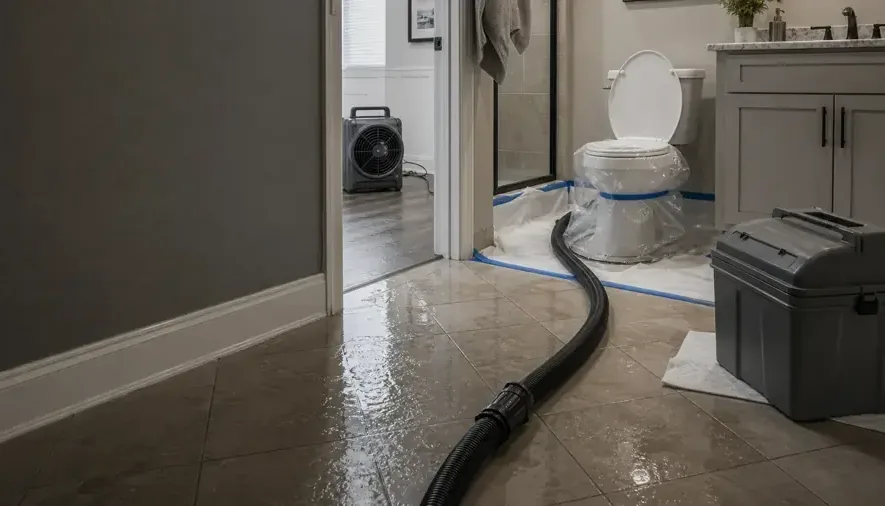
Sewage across tile can also reach grout joints, cabinet bases and porous finishes at the edge of the room. In Wilsonville, the Public Works Department maintains the sewer collection system, while Jacobs operates the wastewater treatment plant under contract. A property backup needs its own plumbing assessment alongside interior cleanup. Whether the affected room is in Old Town, Town Center or Morey's Landing, occupants should avoid crossing the wastewater boundary or carrying exposed belongings into a clean space.
- The restoration team marks wet boundaries before placing drying equipment.
- Source water, contamination and material condition determine the removal scope.
- Documented material readings, checked against an appropriate dry reference, determine completion.
What does sewer backup cleanup cost in Wilsonville, OR?
Sewer backup cleanup costs in Wilsonville reflect contamination spread, material removal and access for cleaning. A tiled corner differs from wastewater beneath finished walls or across several rooms, where handling and drying require a larger coordinated scope.
Confined hard-surface backup
- Limited wastewater boundary
- Accessible surface cleaning
- Contained removal route
Finished-room contamination
- Porous finish exposure
- Selective contaminated removal
- Retained material drying
Multiple affected spaces
- Broader exposure mapping
- Additional contents handling
- Expanded cleaning access
Ranges are typical, not a quote: category of water, square footage, material class and how fast drying started move the number most. Run the water damage cost calculator for a closer range.
How sewer backup cleanup is handled in Wilsonville
The tech who does the walkthrough maps moisture through the affected assembly and records a dry comparison. The drying team adjusts airflow and humidity control after each inspection, then confirms the material goal before removing equipment.
- 1
Define the exposure boundary
Assessment identifies where wastewater traveled, what remains actively discharging and which access routes can avoid spreading contamination to occupied rooms.
- 2
Remove affected liquid and debris
Controlled handling clears wastewater and unsuitable materials while separating salvage decisions from the movement of unaffected contents through the property.
- 3
Clean remaining accessible surfaces
Retained surfaces receive cleaning appropriate to their condition, with concealed exposure addressed before drying equipment is arranged within the work zone.
- 4
Check drying and reopening
Moisture, cleaning tasks and drainage repair status are documented before finishes return or routine room access resumes.
Contain the room before handling contents
Ordinary foot traffic can spread residue beyond the original overflow. The cleanup plan should establish an access route, separate affected items and identify materials that cannot be reliably cleaned in place. Fans should not circulate air through untreated sewage residue. Standing wastewater, loose debris and contaminated porous layers require a controlled removal sequence before retained surfaces are evaluated for drying.
- Keep children and pets away from the affected floor.
- Avoid using fixtures that cause additional backup during discharge.
- Leave exposed rugs and fabric items inside the restricted area.
- Record the affected boundary without walking through contaminated water.
Resolve the backup and the building damage
Clearing an obstruction addresses drainage, but it does not clean materials already exposed inside the property. A plumber should assess drainage function before the affected fixtures return to normal use. The property contact should coordinate plumbing findings, any public system reporting and the interior cleanup scope so each responsibility has a clear next action.
The city treats wastewater before discharge to the Willamette River. Inside a damaged room, cleaning concerns center on the actual surfaces touched by the backup, including low wall cavities or adjoining flooring reached beneath a threshold.
Dry only what can remain safely
Hard surfaces may be cleaned after accessible contamination is removed. Swollen or sewage exposed porous finishes may require disposal, with openings sized around the affected assembly. The structural drying work then addresses retained materials and should be documented separately from cleaning. Before the room reopens, remaining contamination concerns, moisture conditions and the corrected drainage issue all need check.
- Document disposal decisions by material and location within the room.
- Keep the removal route separate from unaffected household traffic.
- Explain the cleaning scope before replacement finishes conceal the assembly.
Sewer backup cleanup across Wilsonville
Wastewater damage assessments include Old Town, Town Center and Morey's Landing in ZIP 97070, with attention to shared access and adjoining occupied rooms.
The same service nearby: sewer backup cleanup in Tualatin, Sherwood, Tigard.
Water damage restoration in Wilsonville · every neighborhood covered
Related water damage services in Wilsonville

Sewer Backup Cleanup questions in Wilsonville, OR
Is a sewage backup only a plumbing problem?
Plumbing work addresses the cause of discharge. Interior cleanup must separately handle exposed finishes, belongings and moisture that remains after drainage is restored.
Can a room fan be used immediately?
Air circulation through untreated wastewater residue can spread contamination. Removal and cleaning decisions should come before ordinary drying airflow in the affected room.
Who maintains the city sewer collection system?
The Public Works Department maintains the collection system. A backup at a property still requires assessment to identify its location and the appropriate repair contact.
Should exposed towels go into household laundry?
Handling depends on contamination and item condition. Keep affected fabrics isolated until a cleanup assessment determines whether cleaning or disposal is appropriate.
Will removing the odor complete the cleanup?
Cleaning should address exposed surfaces, concealed residue and retained moisture throughout the assembly. The completed work needs assessment beyond a change in room odor.
Can adjoining rooms remain occupied during the work?
Occupancy depends on separation, access routes and contamination control. The plan should identify which areas can remain usable without crossing the restricted work zone.
Restore a usable room after wastewater entry
The cleanup scope should connect controlled removal, surface cleaning and drying with the plumbing work needed to prevent continuing discharge.